The Strategic Thesis: The "Gatorade Playbook" Mirror
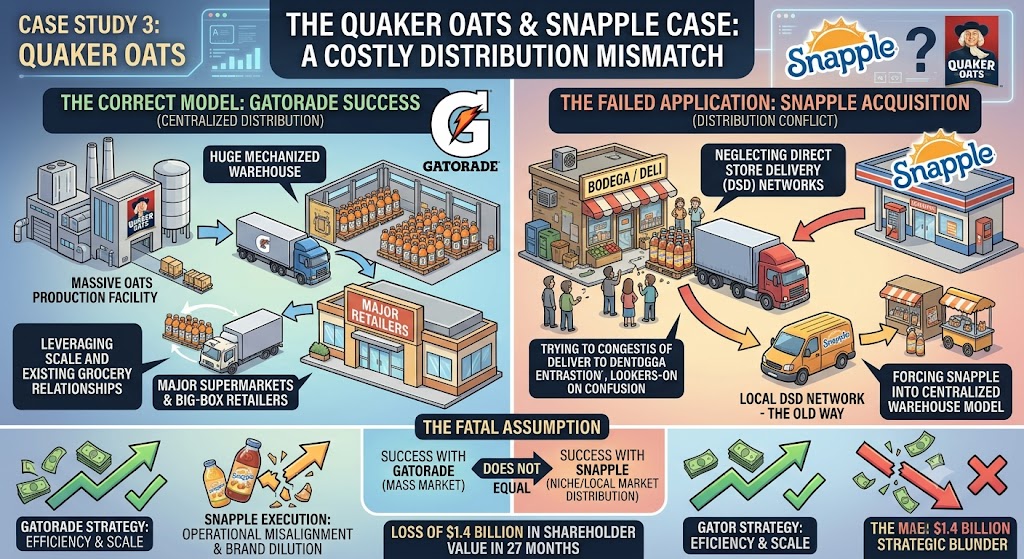
In 1983, Quaker Oats acquired Gatorade for $220 million and turned it into an international powerhouse. Quaker built a highly efficient, massive logistical engine that sold Gatorade directly to major supermarket chains, big-box retailers, and massive sports organizations.
When Quaker looked at Snapple in 1994, they saw the exact same opportunity. Snapple was a red-hot alternative beverage brand making premium iced teas and juices. Quaker’s CEO, William Smithburg, confidently assumed they could take the exact same distribution and marketing playbook that succeeded with Gatorade and apply it to Snapple to scale it globally.
The Financial Breakdown
Acquisition Price: $1.7 billion (bought at a premium multiple of roughly 32x earnings).
Divestiture Price: Sold just 27 months later to Triarc Companies for a paltry $300 million.
The Loss: Quaker destroyed over $1.4 billion in shareholder value—amounting to a loss of roughly $1.6 million per day during their ownership.
The Fatal Flaws: Structural Blindspots
The Distribution Disconnect (Warehouse vs. DSD): Gatorade was distributed through a Warehouse Model—shipped on massive pallets directly to central grocery distribution hubs. Snapple, however, grew famous through Direct Store Delivery (DSD). It relied on a highly fragmented network of independent, local distributors who literally drove small trucks to corner delis, gas stations, independent convenience stores, and street vendors.
The Blunder: Quaker tried to bypass these independent distributors to force Snapple into their grocery warehouse system. The independent distributors revolted, refused to push the product, and competitors rushed into the mom-and-pop stores that originally made Snapple popular.
Manufacturing Missteps: Snapple required a "hot-fill" bottling process to preserve its natural juices and teas without preservatives. Quaker’s existing Gatorade plants were not built for this, creating manufacturing bottlenecks and driving up production costs.
Killing the Brand DNA: Snapple’s marketing was famously quirky, centered around "Wendy the Snapple Lady" (an actual employee answering fan mail) and sponsoring controversial radio hosts like Howard Stern. Quaker corporate viewed this as low-brow. They fired Wendy, dropped the edgy sponsorships, and launched an expensive, generic, institutional mass-marketing campaign that stripped Snapple of its cult appeal.
Deep Takeaway : Operational due diligence must go deeper than "product category." Just because two companies sell beverages does not mean they share the same supply chain, distributor relationships, or consumer psychology.